
Decentralized Art
A draft definition
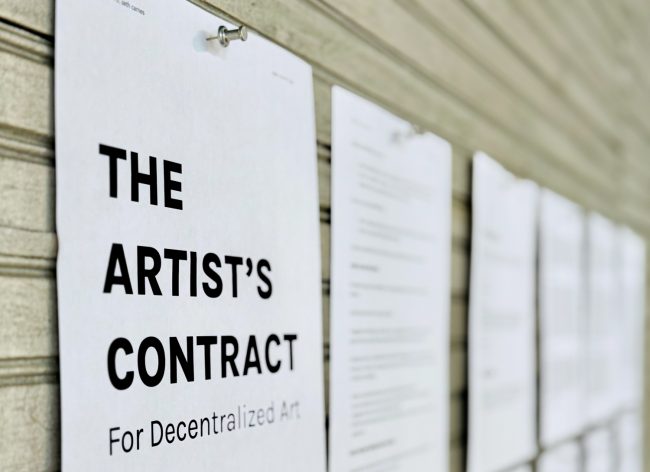
In 2023, when work began in TXT on a new artist's contract for digital art certified and transferred on blockchain, it soon became apparent that no clear name or definition existed for this type of art, and we needed both to achieve an internal, shared understanding of the art this contract would govern.
A sub project was started by Seth Carnes to research and define a working term. Research and discussion ruled out the non-fungible token (NFT), as this was the certificate of authenticity for the artwork, not the artwork itself, in most cases. 'Crypto art' was also ruled out, as it was associated with digital currencies and cryptography more than a core ethos for the art form.
Further research and inquiry landed on 'decentralized art', as it was a term in use that best described an evolving ethos and practice. This selection of the artwork name occurred in tandem with naming the contract itself, as The Artist's Contract for Decentralized Art (ACDA)
Decentralized Art was first defined for internal use in TXT for the ACDA in progress. The latest version appears below:
v1.3 | 10-21-25
Decentralized Art
As a practice, decentralized art distributes and locates conception, production, control, and equity outside of central authority, across rhizomatic networks with artists as its source nodes.
Decentralized art is dematerialized, non-fungible, and immutable, with encoded, built-in provenance and authentication. Artworks can be analog, physical, digital, or hybrid; their unifying characteristics are separate from the artistic medium.
Artists creating decentralized art make use of blockchain technology, non-fungible tokens (NFTs), agreements, smart contracts, and encryption to transparently define concept and origin, to securely sell and distribute artworks, track provenance, and build communities that cross geography, class, and culture.
Decentralized art is connected to past art movements, groups, and subcultures, including dada, conceptual art, mail art, street art, punk, land art, internet art, and social practice, along with Fluxus and the Situationists.
In early 2024, Carnes began work on a more objective definition for decentralized art for Wikipedia, using historical research and citations, with a goal of further development for the definition in a decentralized manner on Wikipedia, over time with many public contributors.
The first definition was published for review on May 22, 2024. Since then, it has been rejected six times by Wiki editors and remains unpublished, with 49 citations. The citations include many reliable sources, also core innovators and writers on this type of art, including Kevin McCoy, co-inventor of the NFT, Stuart Haber, co-inventor of blockchain technology, and Christiane Paul, Curator of Digital Art at the Whitney Museum.
“Decentralization has…a civic dimension since it increases the opportunities for citizens to take interest in public affairs; it makes them get accustomed to using freedom.”
Alexis de Tocqueville
Philosopher, Historian, and Diplomat
Other TXT projects